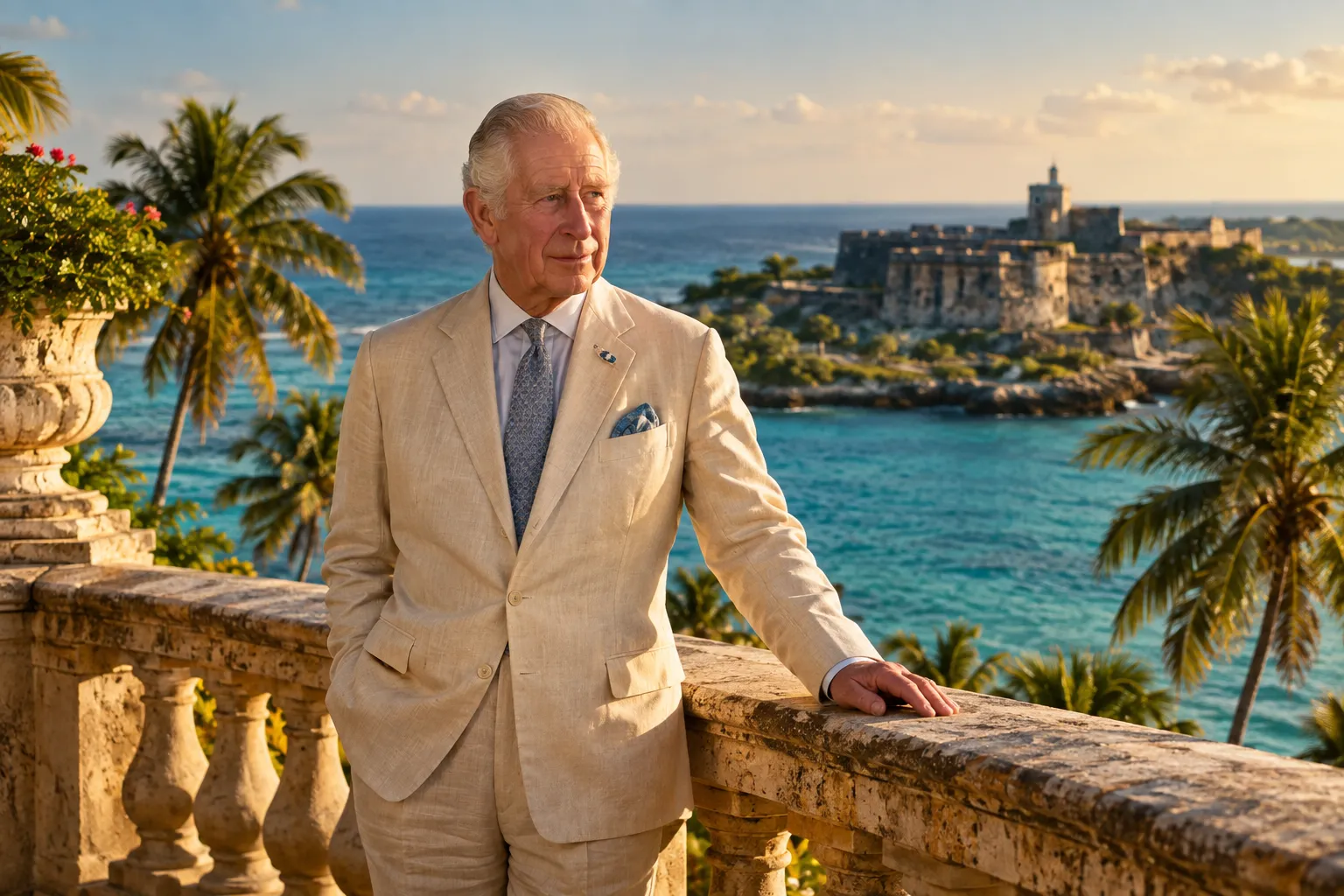
King Charles III’s upcoming visit to the Caribbean will focus on the longstanding relationship between Britain and Guyana rather than being defined solely by the debate over slavery reparations, Guyana’s President, Dr Irfaan Ali, has said.
The King is due to undertake a high-profile Caribbean tour later this month, including a visit to Guyana and an official Realm Visit to the Bahamas. The trip comes amid renewed calls for Britain to address the lasting consequences of slavery and colonialism through reparatory justice.
President Ali has called for a mature and constructive discussion about reparations, arguing that the issue should focus on addressing the deep-rooted inequalities created by slavery rather than being portrayed as a demand for financial payback or charitable assistance.
Speaking ahead of the King’s visit, Dr Ali said the monarch would receive a warm welcome in Guyana, highlighting the country’s tradition of hospitality and the King’s longstanding engagement with the nation.
He reaffirmed Guyana’s commitment to pursuing reparations, describing slavery as one of the greatest indignities inflicted on humanity. However, he emphasised that the royal visit encompasses a much broader relationship between the two countries.
According to the Guyanese president, the visit should also be understood in the context of the King’s environmental advocacy, his support for Guyana’s international profile and the shared interest in protecting forests, addressing climate change and promoting sustainable development.
The Continuing Debate Over Slavery Reparations
The question of reparations remains a sensitive issue across the Caribbean, where campaigners and political leaders have called on Britain and other former colonial powers to acknowledge the enduring consequences of slavery.
Guyana’s history is deeply connected to the transatlantic slave trade. Under Dutch and later British colonial rule, tens of thousands of enslaved Africans were transported to the territory and forced to work on plantations, particularly in the sugar industry. The brutal conditions, exploitation and lasting social inequalities of that period continue to shape discussions about historical responsibility.
Reparations advocates argue that the effects of slavery did not end with emancipation. They maintain that the economic disadvantages, racial inequalities and institutional legacies created during centuries of colonial exploitation continue to affect Caribbean societies.
Proposals for reparatory justice vary considerably. Some campaigners advocate direct financial compensation, while others support investment in education, healthcare, economic development, cultural restoration and other programmes intended to address the long-term consequences of slavery.
In the Bahamas, campaigners have urged the King to ensure that his visit is accompanied by meaningful action rather than symbolic gestures alone.
Nevertheless, British government ministers have given no indication that the King will be asked to issue a formal apology or offer financial compensation to Caribbean nations.
Britain Maintains Its Position on Financial Compensation
The UK Government continues to reject calls for financial reparations for historical slavery. Officials argue that Britain has no legal obligation to provide compensation for historical acts, particularly where those acts were not unlawful under the international legal framework of the time.
The Foreign, Commonwealth and Development Office has reiterated that the Government will not pay financial reparations, while acknowledging the horrific nature of the transatlantic slave trade and the continuing effects of its legacy.
Concerns have also been raised within government circles about the legal implications of a formal apology. Some officials fear that such a statement could strengthen claims for compensation and establish a precedent for similar demands from other former colonies.
Britain’s extensive colonial history means that any change in its position could have implications well beyond Guyana and the Caribbean.
The Government’s stance has frustrated reparations campaigners, who argue that acknowledging historical suffering is not enough without concrete measures to address its consequences. They maintain that a meaningful response should recognise the connection between historical exploitation and present-day development inequalities.
The King’s Constitutional Position
Buckingham Palace has emphasised that King Charles acts on the advice of the elected government in accordance with the UK’s constitutional arrangements.
This means that decisions concerning an official government apology or financial reparations are matters for ministers rather than the monarch acting independently.
However, royal officials have highlighted the King’s longstanding engagement with Commonwealth communities, educational initiatives and environmental causes.
His support for young people through The King’s Trust, alongside his involvement in Commonwealth education programmes, has been presented as part of his wider commitment to improving opportunities and addressing inequality.
The King has also previously expressed sorrow over aspects of the history of slavery and colonialism. Palace sources have indicated that the visit could provide an opportunity to reaffirm his personal commitment to confronting historical injustices without making a formal apology, which remains a matter for the Government.
Environmental Cooperation Offers Common Ground
Despite the continuing disagreements over reparations, the King’s visit is expected to highlight areas of cooperation between Britain and Guyana.
Environmental protection is particularly significant. Guyana possesses extensive rainforest ecosystems that play an important role in biodiversity conservation and climate regulation. The country’s efforts to protect its forests and develop sustainable economic opportunities have attracted international attention.
King Charles has spent decades campaigning on environmental issues, including rainforest conservation, climate change and the protection of Indigenous communities.
For many people in Guyana, these areas of shared interest remain an important part of the relationship between the monarch and the country.
President Ali’s remarks suggest that the visit should be viewed in the context of this broader partnership, encompassing environmental protection, international cooperation and development, alongside the difficult questions surrounding slavery and reparatory justice.
A Visit Shaped by History and the Future
The King’s Caribbean tour comes at a time when questions of historical responsibility remain firmly on the political agenda. While Guyana continues to advocate for reparations, its president has made clear that the royal visit should not be reduced to a single issue.
The challenge for Britain will be to acknowledge the suffering caused by slavery and its lasting consequences while navigating the Government’s refusal to provide financial compensation.
For campaigners, the central question remains whether expressions of regret and commitments to future cooperation can adequately address the historical injustices experienced by enslaved people and their descendants.
For Guyana, the visit offers an opportunity to strengthen international partnerships, promote environmental priorities and continue pressing for a serious discussion about reparatory justice.
Ultimately, the significance of the tour will depend on whether the dialogue surrounding historical injustice can lead to a deeper understanding of the past and meaningful cooperation in addressing inequalities that persist today.