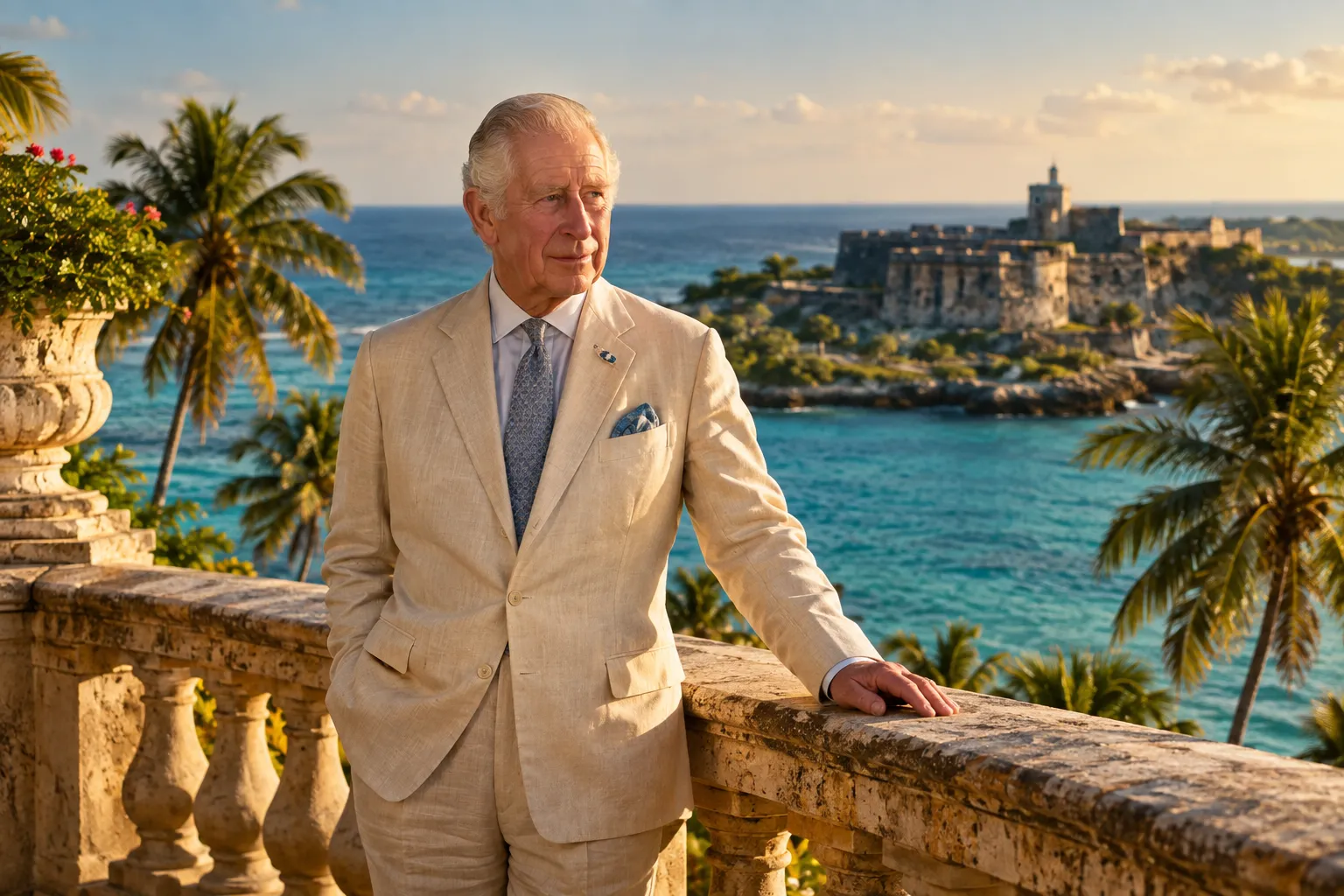
King Charles is heading for a Caribbean tour with a deeply uncomfortable chapter of British history hanging over his visit.
The monarch is expected to confront the shame surrounding Britain’s role in the transatlantic slave trade when he travels to the Bahamas, Guyana and Antigua and Barbuda, rather than sweeping the issue under the royal carpet.
But there is a major catch.
While Buckingham Palace has made it clear that Charles will not shy away from Britain’s involvement in slavery, there will be no formal royal apology and no promise of reparations.
That awkward divide between admitting the horrors of the past and taking responsibility for them is set to dominate the King’s Caribbean trip.
Britain was responsible for transporting millions of enslaved Africans across the Atlantic, leaving a legacy that continues to influence relationships between the UK and Caribbean nations generations after slavery was abolished.
Now Charles is preparing to step directly into that history.
Charles ready to face the slavery debate
Palace officials have indicated that the King will speak openly about Britain’s historical involvement in the slave trade during his visit.
The wording is significant.
Rather than avoiding the subject, Charles is expected to acknowledge the suffering and injustice caused by slavery and the lasting impact it has had on Caribbean communities.
It is a stance that reflects comments he has made previously.
The King has described slavery as an atrocity and referred to it as one of the darkest chapters in shared history. He has also spoken of the way slavery continues to cast a shadow over the historical record.
Those words could carry particular weight when spoken on Caribbean soil.
For many people across the region, however, words alone are unlikely to be enough.
No royal apology – and no cheque
Despite the strong language expected from Charles, the Palace has made clear that the King will not be arriving with a formal apology or a reparations package.
That is because the monarch cannot simply make such decisions himself.
As a constitutional monarch, Charles acts within the framework of government, meaning major political or financial commitments would have to come from elected ministers rather than the King personally.
It creates a delicate balancing act.
Charles can acknowledge the suffering caused by slavery and express sorrow over Britain’s historical role, but he cannot arrive in the Caribbean and announce that the British government will pay reparations.
For campaigners who want action as well as words, that distinction may do little to ease the anger.
Guyana could be the pressure point
Of the King’s three stops, Guyana could prove particularly sensitive.
Calls for Britain to acknowledge its role in slavery and consider reparative justice have grown increasingly prominent across the Caribbean, and Guyanese leaders have been among those pressing the issue.
The argument is straightforward: recognising the horrors of slavery is one thing, but supporters of reparations believe acknowledgement must eventually be followed by meaningful action.
Caribbean governments and campaigners have also backed a wider regional framework calling for measures to address the long-term consequences of slavery and colonialism.
That means Charles could find himself under intense pressure to go further than carefully crafted speeches.
All eyes on what Charles actually says
The King’s speeches will be dissected word by word.
Will he use the strongest language he has employed in the past? Will he speak directly about Britain’s responsibility? Will he acknowledge the continuing demands for reparations?
And perhaps most importantly, will he use the word “sorry”?
Royal speeches are notoriously precise, and the difference between expressing sorrow, regret and issuing a formal apology can have enormous political significance.
Charles is therefore likely to tread a very narrow line – recognising the brutality of slavery while avoiding any commitment that could be interpreted as a promise of compensation or a formal admission of state liability.
A royal tour with history hanging over it
The trip will take Charles through three countries with very different political circumstances but a shared connection to Britain’s colonial past.
The Bahamas will provide a backdrop of long-standing Commonwealth ties and a history intertwined with plantation economies.
Guyana is likely to be the most politically charged stop, with reparations and Britain’s role in slavery already high on the agenda.
The tour will culminate in Antigua and Barbuda, where Commonwealth leaders will gather for the Commonwealth Heads of Government Meeting.
That gives the issue an even bigger stage.
Charles will not simply be speaking to the people of one Caribbean nation. His words could be heard by leaders and citizens across the Commonwealth, many of whom have their own complicated histories with Britain.
The question nobody can ignore
For the Palace, the message appears to be that Britain’s history should not be hidden or sanitised.
For Caribbean campaigners, the question is what comes next.
Acknowledging the past may be welcomed, but it does not necessarily satisfy demands for an apology, reparations or practical measures aimed at addressing the legacy of slavery.
That is why the King’s visit is likely to be watched so closely.
Charles can speak about Britain’s darkest history, recognise the suffering of enslaved people and express his sorrow over what happened.
But when he leaves the Caribbean, the bigger question will remain:
Will the words mark a genuine change in the relationship between Britain and the Caribbean, or will they simply be another carefully delivered royal statement about a painful past?
For King Charles, the history cannot be avoided. And this time, the world will be listening to every word.