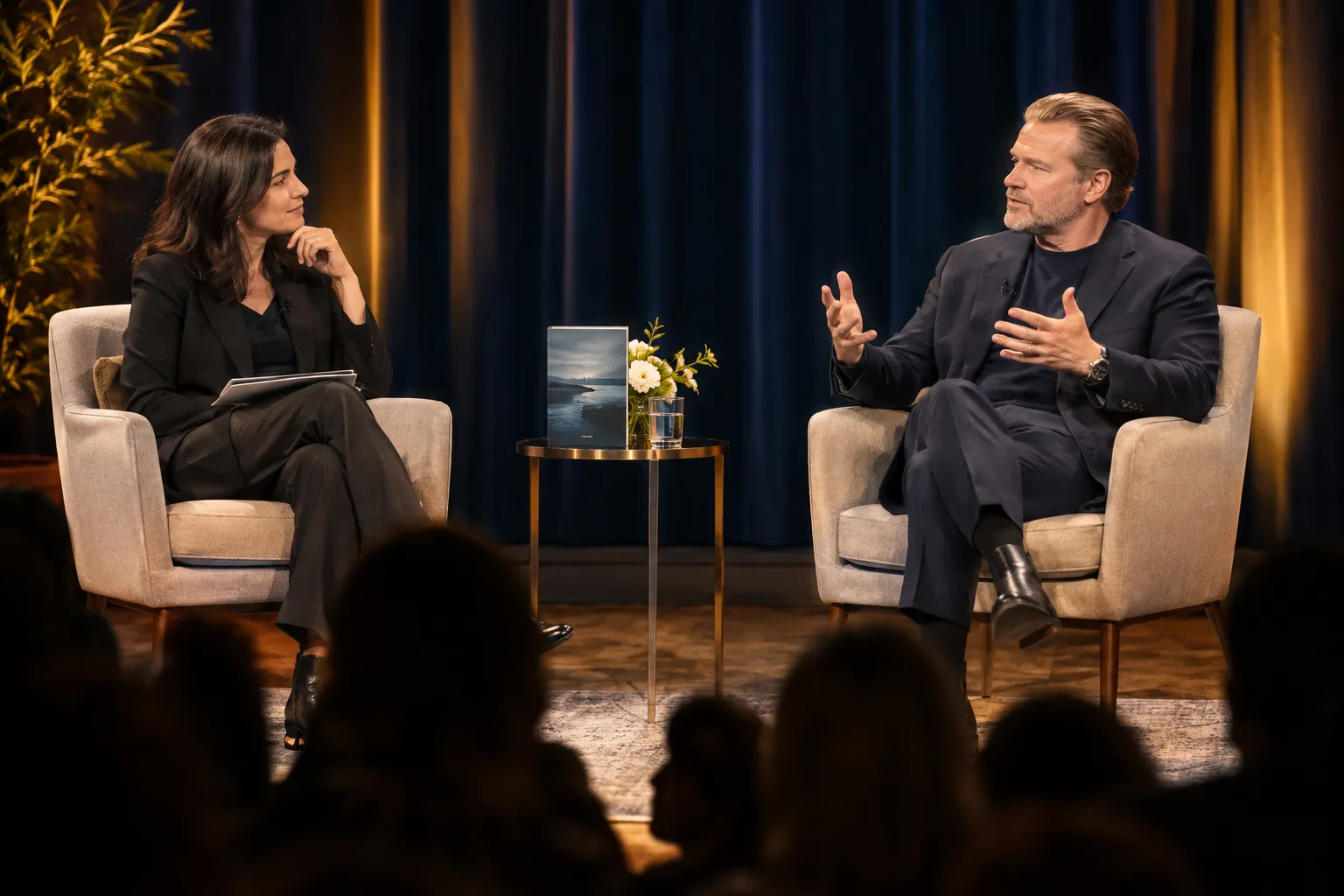
Charles Spencer has issued a striking warning about the British Royal Family, arguing that its influence extends well beyond ceremonies, titles and constitutional tradition.
In a recent interview for Marie Claire, Diana’s brother said people underestimate the institution’s ability to shape public narratives and influence the treatment of those who challenge it.
His comments come as he promotes his memoir, Swan Song: Diana, My Sister, in which he revisits Diana’s life, her relationship with the Royal Family and the events surrounding her death.
For Spencer, the issue is deeply personal.
Spencer’s Warning
Spencer argues that the monarchy’s influence is most visible not through formal political authority, but through its relationships with the media and the wider culture surrounding the institution.
He has claimed that people who step outside what the Royal Family considers acceptable can face intense press scrutiny, describing the ability to mobilise sections of the British media as a powerful weapon against perceived opponents.
His warning is rooted partly in what he believes happened to Diana.
According to Spencer, challenging the institution can come at a considerable personal cost, particularly when hostile media coverage becomes part of the response.
Diana Remains at the Centre
Much of Spencer’s criticism inevitably returns to his sister.
He has argued that the Royal Family failed to recognise the extraordinary opportunity Diana represented. Instead of embracing her enormous popularity, he believes the institution regarded her as a disruptive presence.
That interpretation forms an important part of Swan Song, which presents Spencer’s account of Diana’s increasingly difficult relationship with the monarchy.
He has also suggested that those who challenge royal expectations risk experiencing the kind of media hostility Diana faced.
What Happened Behind the Scenes?
Spencer has also questioned the culture of deference surrounding the monarchy.
He has criticised the formal language frequently used by broadcasters and newspapers when reporting royal statements, arguing that it reinforces the institution’s authority in ways that are rarely examined.
For Spencer, this is where much of the monarchy’s modern influence lies: not in direct political intervention, but in status, access, public perception and its relationship with the media.
That makes his criticism less about constitutional power and more about influence.
A Memoir With More Left Unsaid?
One of the most intriguing elements of Spencer’s recent comments is his suggestion that Swan Song does not reveal everything he knows.
He has indicated that he deliberately left certain details out of the book, despite anticipating controversy and criticism.
That immediately raises questions about what remains unpublished.
If Spencer does possess further information about Diana, the Royal Family and the events surrounding her death, his decision to withhold it could prove almost as interesting as what he chose to include.
Why His Comments Matter
Spencer is not simply another royal commentator.
He is Diana’s brother and has spent decades observing the monarchy and the media from unusually close quarters.
His interpretation remains his own, and his allegations should be treated as claims rather than established fact. But his position gives his comments particular significance.
His remarks also echo concerns previously raised by Prince Harry and Meghan Markle about the Royal Family’s relationship with the press and the treatment of those who challenge the institution.
The circumstances and allegations differ, but the wider question remains familiar:
How much influence does the monarchy possess beyond the powers formally assigned to it?
Spencer believes the answer is considerably more than many people realise.
And with Swan Song bringing Diana’s story back into the spotlight, his comments suggest the conversation is far from over.
For someone who says he deliberately left some of the most damaging details out of his memoir, the obvious question is whether this is the end of the story — or only the beginning.